
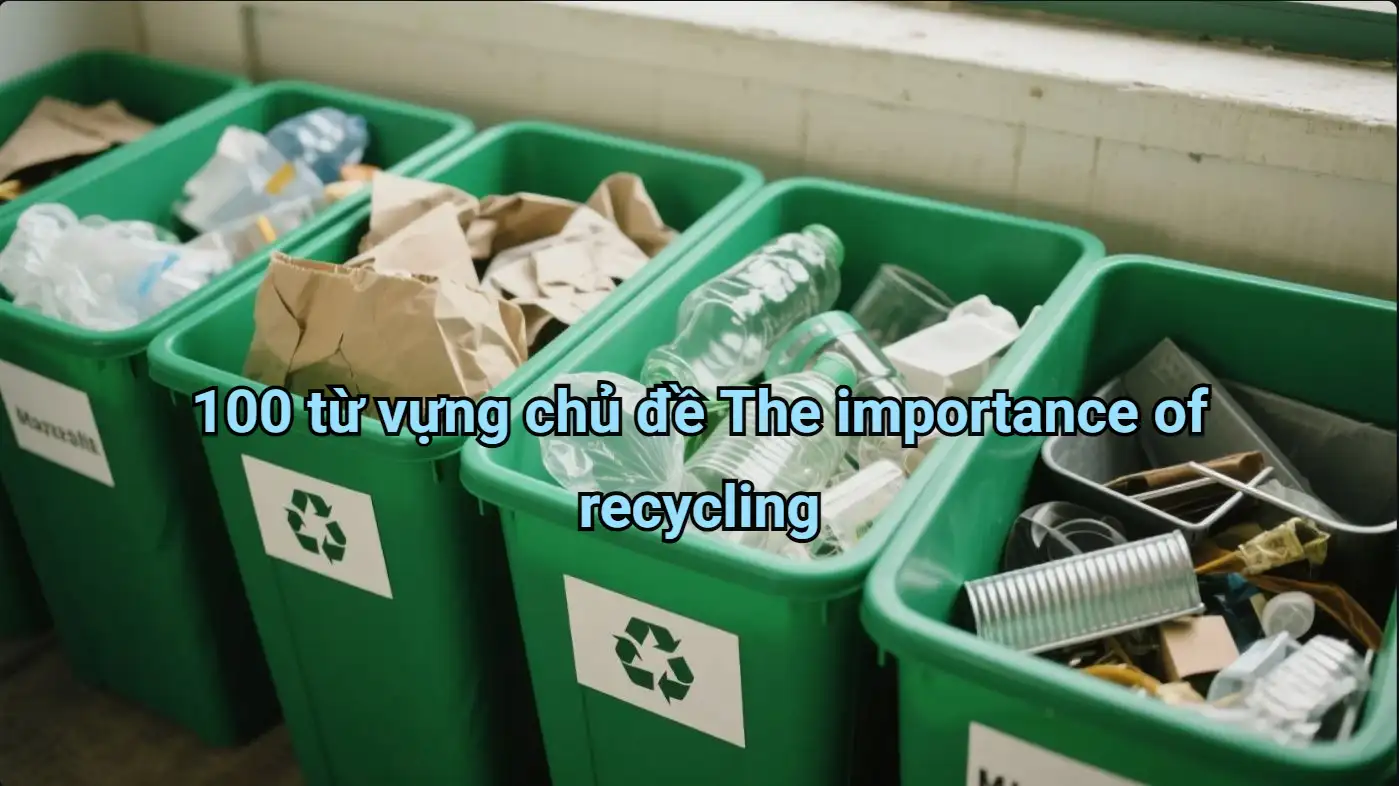
Tái chế đóng vai trò quan trọng trong việc bảo vệ môi trường và tiết kiệm tài nguyên thiên nhiên. Việc hiểu và sử dụng đúng các từ vựng liên quan đến tái chế không chỉ giúp bạn nâng cao vốn từ tiếng Anh mà còn góp phần lan tỏa thông điệp về ý thức bảo vệ hành tinh xanh. Trong bài viết này, chúng tôi sẽ cung cấp danh sách 100 từ vựng tiếng Anh chủ đề tái chế, kèm theo nghĩa và ví dụ minh họa, hỗ trợ bạn học tập hiệu quả và áp dụng thực tiễn.
Đọc thêm: 1 số từ vựng tiếng anh cơ bản.
Đọc thêm: 1000 từ vựng tiếng Anh cơ bản PDF
Danh sách từ vựng
- Recycle – Tái chế
Ví dụ: We should recycle plastic bottles to reduce waste. - Waste – Rác thải
Ví dụ: The city produces tons of waste every day, which needs proper management. - Environment – Môi trường
Ví dụ: Recycling helps protect the environment from pollution. - Sustainability – Tính bền vững
Ví dụ: Adopting sustainable practices can ensure a healthier planet. - Compost – Phân hữu cơ
Ví dụ: Kitchen scraps can be turned into compost for gardening. - Landfill – Bãi rác
Ví dụ: Sending waste to landfills contributes to environmental degradation. - Biodegradable – Phân hủy sinh học
Ví dụ: Biodegradable materials break down naturally without harming the environment. - Pollution – Ô nhiễm
Ví dụ: Plastic pollution is a major threat to marine life. - Reduce – Giảm thiểu
Ví dụ: We can reduce waste by using reusable bags. - Reuse – Tái sử dụng
Ví dụ: Instead of throwing away old clothes, try to reuse them for other purposes. - Renewable – Có thể tái tạo
Ví dụ: Solar energy is a renewable resource that supports recycling efforts. - Decompose – Phân hủy
Ví dụ: Organic waste decomposes faster than plastic. - Upcycle – Tái chế sáng tạo
Ví dụ: She upcycled old jars into beautiful home decorations. - Conservation – Bảo tồn
Ví dụ: Recycling promotes the conservation of natural resources. - Ecosystem – Hệ sinh thái
Ví dụ: A clean ecosystem benefits both wildlife and humans. - Plastic – Nhựa
Ví dụ: Plastic bags take hundreds of years to decompose. - Glass – Thủy tinh
Ví dụ: Glass bottles can be recycled endlessly without losing quality. - Paper – Giấy
Ví dụ: Recycling paper reduces the need to cut down trees. - Metal – Kim loại
Ví dụ: Aluminum cans are one of the most recycled metals. - Organic – Hữu cơ
Ví dụ: Organic waste can be composted to enrich soil. - Hazardous – Nguy hại
Ví dụ: Hazardous waste like batteries requires special recycling processes. - Disposal – Xử lý
Ví dụ: Proper disposal of waste prevents environmental harm. - Resource – Tài nguyên
Ví dụ: Recycling saves valuable resources like water and minerals. - Carbon footprint – Dấu chân carbon
Ví dụ: Recycling helps reduce our carbon footprint significantly. - Contamination – Ô nhiễm, nhiễm bẩn
Ví dụ: Contamination of recyclables can ruin the recycling process. - Sorting – Phân loại
Ví dụ: Sorting waste into categories makes recycling more efficient. - Degradable – Có thể phân hủy
Ví dụ: Degradable materials are eco-friendly alternatives to plastic. - Emission – Khí thải
Ví dụ: Recycling reduces harmful emissions from manufacturing. - Incineration – Thiêu đốt
Ví dụ: Incineration of waste can release toxic gases into the air. - Raw material – Nguyên liệu thô
Ví dụ: Recycled materials can be used as raw materials for new products. - Renew – Làm mới
Ví dụ: Recycling helps renew resources for future generations. - Salvage – Tái sử dụng, cứu hộ
Ví dụ: We can salvage old furniture to create something new. - Greenhouse gas – Khí nhà kính
Ví dụ: Recycling reduces greenhouse gas emissions from landfills. - Sustainable – Bền vững
Ví dụ: A sustainable lifestyle includes regular recycling habits. - Waste management – Quản lý rác thải
Ví dụ: Effective waste management is key to a cleaner environment. - Energy-efficient – Tiết kiệm năng lượng
Ví dụ: Recycling is an energy-efficient way to produce new goods. - Non-recyclable – Không thể tái chế
Ví dụ: Some plastics are non-recyclable and should be avoided. - Recyclable – Có thể tái chế
Ví dụ: Always check if an item is recyclable before throwing it away. - Eco-friendly – Thân thiện với môi trường
Ví dụ: Using eco-friendly products supports recycling efforts. - Refuse – Rác, từ chối
Ví dụ: Refuse single-use plastics to promote recycling. - Bottle – Chai
Ví dụ: Plastic bottles should be recycled to reduce waste. - Can – Lon
Ví dụ: Aluminum cans are highly recyclable and widely collected. - Cardboard – Bìa cứng
Ví dụ: Cardboard boxes can be recycled into new packaging. - Scrap – Phế liệu
Ví dụ: Scrap metal can be melted down and reused. - Debris – Mảnh vụn
Ví dụ: Construction debris should be sorted for recycling. - Litter – Rác bừa bãi
Ví dụ: Littering harms the environment and hinders recycling efforts. - Collection – Thu gom
Ví dụ: Regular waste collection ensures proper recycling. - Facility – Cơ sở
Ví dụ: Recycling facilities process waste into usable materials. - Process – Quy trình
Ví dụ: The recycling process involves sorting, cleaning, and repurposing. - Material – Vật liệu
Ví dụ: Different materials require specific recycling methods. - Contaminant – Chất gây ô nhiễm
Ví dụ: Food residue is a common contaminant in recycling bins. - Reclaim – Thu hồi
Ví dụ: We can reclaim valuable materials from old electronics. - Repurpose – Tái mục đích
Ví dụ: Old tires can be repurposed into playground surfaces. - Biomass – Khối sinh học
Ví dụ: Biomass from organic waste can be used for energy production. - Chemical – Hóa chất
Ví dụ: Hazardous chemicals must be recycled carefully to avoid harm. - Conserve – Bảo tồn
Ví dụ: Recycling helps conserve natural resources like timber. - Cycle – Chu kỳ
Ví dụ: The recycling cycle reduces the need for virgin materials. - Degradation – Suy thoái
Ví dụ: Environmental degradation can be slowed by recycling. - E-waste – Rác điện tử
Ví dụ: E-waste recycling prevents toxic substances from leaking. - Efficiency – Hiệu quả
Ví dụ: Recycling improves the efficiency of resource use. - Emission – Khí thải
Ví dụ: Reducing emissions is a key benefit of recycling. - Factory – Nhà máy
Ví dụ: Factories use recycled materials to produce new goods. - Fossil fuel – Nhiên liệu hóa thạch
Ví dụ: Recycling reduces the demand for fossil fuels in production. - Global warming – Nóng lên toàn cầu
Ví dụ: Recycling can help mitigate the effects of global warming. - Harvest – Thu hoạch
Ví dụ: Recycled materials are harvested to create new products. - Incinerator – Lò đốt
Ví dụ: Incinerators should be a last resort compared to recycling. - Industry – Ngành công nghiệp
Ví dụ: The recycling industry creates jobs and supports the economy. - Innovation – Đổi mới
Ví dụ: Innovations in recycling technology improve efficiency. - Microplastic – Vi nhựa
Ví dụ: Microplastics are a growing concern in recycling processes. - Packaging – Bao bì
Ví dụ: Recyclable packaging reduces waste in landfills. - Planet – Hành tinh
Ví dụ: Recycling protects our planet for future generations. - Pollutant – Chất gây ô nhiễm
Ví dụ: Pollutants from waste can harm ecosystems if not recycled. - Preserve – Bảo vệ
Ví dụ: Recycling helps preserve natural habitats. - Processing – Xử lý
Ví dụ: Waste processing is a critical step in recycling. - Recovery – Phục hồi
Ví dụ: Material recovery facilities sort recyclables efficiently. - Renewal – Tái tạo
Ví dụ: Recycling supports the renewal of natural resources. - Residue – Cặn bã
Ví dụ: Residue from recycling must be disposed of safely. - Resourceful – Tiết kiệm tài nguyên
Ví dụ: Being resourceful includes recycling whenever possible. - Reuse – Tái sử dụng
Ví dụ: Reusing items reduces the need for recycling. - Sanitation – Vệ sinh
Ví dụ: Proper sanitation ensures recyclables are clean and usable. - Segregation – Phân tách
Ví dụ: Waste segregation improves recycling efficiency. - Synthetic – Tổng hợp
Ví dụ: Synthetic materials like plastics require careful recycling. - Textile – Vải
Ví dụ: Textile recycling reduces waste from old clothes. - Toxic – Độc hại
Ví dụ: Toxic waste must be handled by specialized recycling centers. - Transfer – Chuyển giao
Ví dụ: Waste is transferred to recycling facilities for processing. - Trash – Rác
Ví dụ: Sorting trash properly aids the recycling process. - Urban – Đô thị
Ví dụ: Urban areas generate large amounts of recyclable waste. - Utilize – Sử dụng
Ví dụ: We can utilize recycled materials to create new products. - Wasteful – Lãng phí
Ví dụ: Being wasteful harms the environment; recycling helps. - Waterway – Đường thủy
Ví dụ: Recycling prevents waste from polluting our waterways. - Wildlife – Động vật hoang dã
Ví dụ: Recycling protects wildlife from harmful waste. - Zero waste – Không rác thải
Ví dụ: The zero-waste movement encourages recycling and reusing. - Contribute – Đóng góp
Ví dụ: Everyone can contribute to recycling efforts. - Decompose – Phân hủy
Ví dụ: Some materials take years to decompose without recycling. - Effort – Nỗ lực
Ví dụ: Community recycling efforts can make a big difference. - Generate – Tạo ra
Ví dụ: Cities generate vast amounts of recyclable waste daily. - Impact – Tác động
Ví dụ: Recycling has a positive impact on the environment. - Initiative – Sáng kiến
Ví dụ: Local recycling initiatives encourage sustainable habits. - Maintain – Duy trì
Ví dụ: Recycling helps maintain a clean and healthy environment. - Promote – Thúc đẩy
Ví dụ: Schools should promote recycling to educate young generations.