
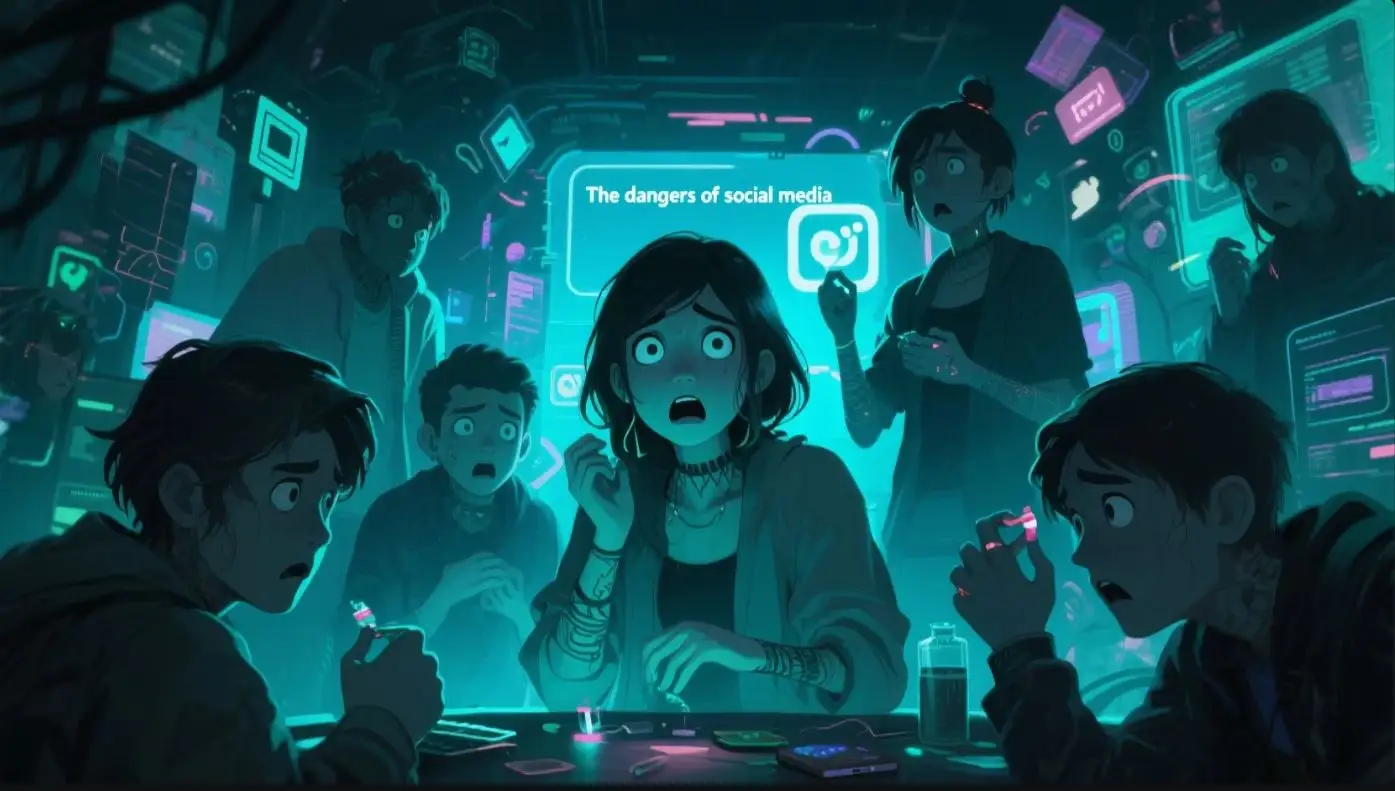
Danh sách 100 từ và cụm từ liên quan đến chủ đề ‘Những mối nguy hiểm của Mạng xã hội,’ được trình bày theo định dạng ‘Từ/Cụm từ – Ý nghĩa’ kèm theo các câu ví dụ. Những từ này bao gồm các khái niệm như vấn đề về quyền riêng tư, sức khỏe tâm thần, thông tin sai lệch, và nhiều vấn đề khác liên quan đến các rủi ro của mạng xã hội.
Đọc thêm: 1 số từ vựng tiếng anh cơ bản.
Đọc thêm: 1000 từ vựng tiếng Anh cơ bản PDF
- Addiction – Nghiện
Example: Social media addiction keeps her scrolling for hours daily. - Algorithm – Thuật toán
Example: Algorithms push harmful content to impressionable users. - Anonymity – Sự ẩn danh
Example: Anonymity online encourages toxic comments. - Anxiety – Lo âu
Example: Constant likes-checking triggers anxiety in teens. - Attention span – Khoảng thời gian tập trung
Example: Social media shortens kids’ attention spans significantly. - Baiting – Nhử mồi
Example: Clickbait headlines bait users into false stories. - Body image – Hình ảnh cơ thể
Example: Filters distort body image for young girls. - Breach – Vi phạm
Example: Data breaches expose users’ private information. - Bullying – Bắt nạt
Example: Cyberbullying on platforms hurts teens’ self-esteem. - Catfishing – Lừa đảo danh tính
Example: She was catfished by a fake profile. - Censorship – Kiểm duyệt
Example: Censorship on platforms limits free speech. - Clickbait – Mồi nhấp chuột
Example: Clickbait lures users to unreliable websites. - Comparison – So sánh
Example: Social media fuels unhealthy comparisons daily. - Content – Nội dung
Example: Harmful content spreads rapidly online. - Cybercrime – Tội phạm mạng
Example: Social media enables cybercrime like hacking. - Cyberstalking – Theo dõi qua mạng
Example: Cyberstalking makes users feel unsafe. - Data mining – Khai thác dữ liệu
Example: Companies use data mining to target ads. - Deception – Lừa dối
Example: Fake accounts spread deception online. - Depression – Trầm cảm
Example: Social media can worsen depression symptoms. - Desensitization – Mất nhạy cảm
Example: Violent posts cause desensitization in viewers. - Digital footprint – Dấu chân số
Example: Her digital footprint revealed private details. - Disinformation – Thông tin sai lệch
Example: Disinformation spreads during elections online. - Distraction – Phân tâm
Example: Social media is a constant distraction. - Doxxing – Tiết lộ thông tin cá nhân
Example: Doxxing exposes victims’ addresses publicly. - Echo chamber – Phòng vang
Example: Social media creates echo chambers for bias. - Envy – Ghen tị
Example: Perfect posts spark envy among followers. - Exploitation – Bóc lột
Example: Predators use platforms for exploitation. - Exposure – Phơi bày
Example: Kids face exposure to adult content. - FOMO – Sợ bỏ lỡ
Example: FOMO drives excessive social media use. - Filter – Bộ lọc
Example: Filters create unrealistic beauty standards. - Fraud – Gian lận
Example: Scammers commit fraud via fake profiles. - Grooming – Dụ dỗ
Example: Online grooming targets vulnerable children. - Hacking – Xâm nhập
Example: Hacking compromises social media accounts. - Harassment – Quấy rối
Example: Online harassment affects mental health. - Hate speech – Ngôn từ thù hận
Example: Hate speech thrives on unmoderated platforms. - Identity theft – Trộm danh tính
Example: Sharing too much risks identity theft. - Impersonation – Mạo danh
Example: Impersonation scams trick unsuspecting users. - Inauthenticity – Không chân thực
Example: Inauthenticity in posts misleads followers. - Inferiority – Tự ti
Example: Curated lives cause inferiority feelings. - Influencer – Người ảnh hưởng
Example: Influencers promote harmful products sometimes. - Insecurity – Bất an
Example: Social media fuels insecurity in teens. - Insomnia – Mất ngủ
Example: Late-night scrolling causes insomnia. - Isolation – Cô lập
Example: Overuse leads to social isolation. - Judgment – Phán xét
Example: Online posts invite harsh judgment. - Manipulation – Thao túng
Example: Ads manipulate users’ emotions cunningly. - Mental health – Sức khỏe tâm thần
Example: Social media impacts mental health negatively. - Misinformation – Thông tin sai
Example: Misinformation about health spreads fast. - Moderation – Kiểm duyệt
Example: Poor moderation allows harmful content. - Narcissism – Tự ái
Example: Social media fuels narcissism in users. - Obsession – Ám ảnh
Example: Likes create an obsession for validation. - Overexposure – Phơi bày quá mức
Example: Kids face overexposure to violence online. - Oversharing – Chia sẻ quá mức
Example: Oversharing invites privacy invasions. - Phishing – Lừa đảo qua mạng
Example: Phishing links steal user credentials. - Polarization – Phân cực
Example: Platforms increase political polarization. - Predator – Kẻ săn mồi
Example: Predators target kids on social media. - Pressure – Áp lực
Example: Teens feel pressure to post constantly. - Privacy – Quyền riêng tư
Example: Social media erodes personal privacy. - Propaganda – Tuyên truyền
Example: Propaganda spreads via viral posts. - Radicalization – Cực đoan hóa
Example: Extremist groups use platforms for radicalization. - Scam – Lừa đảo
Example: Fake giveaways are common scams. - Screen time – Thời gian sử dụng màn hình
Example: Excessive screen time harms eyes. - Self-esteem – Lòng tự trọng
Example: Negative comments lower self-esteem. - Sexting – Nhắn tin nhạy cảm
Example: Sexting can lead to blackmail. - Shaming – Xấu hổ công khai
Example: Public shaming ruins reputations online. - Spam – Thư rác
Example: Spam accounts flood comment sections. - Stalking – Theo dõi
Example: Social media enables easy stalking. - Stereotyping – Định kiến
Example: Posts often reinforce harmful stereotyping. - Stress – Căng thẳng
Example: Social media causes stress in users. - Surveillance – Giám sát
Example: Companies use surveillance for ad targeting. - Targeted ads – Quảng cáo nhắm mục tiêu
Example: Targeted ads exploit user data. - Toxic – Độc hại
Example: Toxic comments harm mental well-being. - Trolling – Quấy rối trực tuyến
Example: Trolling creates hostile online spaces. - Trust – Tin tưởng
Example: Fake news erodes trust in media. - Validation – Sự công nhận
Example: Seeking validation drives unhealthy posting. - Viral – Lan truyền
Example: Harmful challenges go viral quickly. - Vulnerability – Sự dễ bị tổn thương
Example: Kids’ vulnerability is exploited online. - Well-being – Sức khỏe tinh thần
Example: Social media harms overall well-being. - Addictive design – Thiết kế gây nghiện
Example: Addictive design keeps users hooked. - Bias – Thiên vị
Example: Algorithms amplify bias in feeds. - Blackmail – Tống tiền
Example: Private photos are used for blackmail. - Bot – Tài khoản tự động
Example: Bots spread misinformation rapidly. - Cancel culture – Văn hóa tẩy chay
Example: Cancel culture destroys reputations unfairly. - Clout – Ảnh hưởng
Example: Chasing clout leads to risky behavior. - Conspiracy – Thuyết âm mưu
Example: Conspiracy theories thrive on platforms. - Consumerism – Chủ nghĩa tiêu dùng
Example: Influencers promote excessive consumerism. - Credibility – Uy tín
Example: Fake news undermines source credibility. - Crisis – Khủng hoảng
Example: Social media worsens mental health crises. - Defamation – Phỉ báng
Example: False posts lead to defamation lawsuits. - Dependency – Phụ thuộc
Example: Teens show dependency on social media. - Discrimination – Phân biệt đối xử
Example: Hateful posts promote discrimination online. - Engagement – Tương tác
Example: Platforms prioritize engagement over safety. - Ethics – Đạo đức
Example: Social media raises ethics concerns. - Extremism – Chủ nghĩa cực đoan
Example: Platforms can amplify extremism. - Fake news – Tin giả
Example: Fake news misleads millions daily. - Harm – Tác hại
Example: Social media causes harm to youth. - Influence – Ảnh hưởng
Example: Negative influence shapes young minds. - Regulation – Quy định
Example: Governments demand better platform regulation. - Reputation – Danh tiếng
Example: Online attacks damage personal reputation. - Risk – Rủi ro
Example: Social media poses risks to privacy. - Security – An ninh
Example: Weak security leads to account hacks.